What Happens to Your Skin in Your 30s, 40s, and 50s
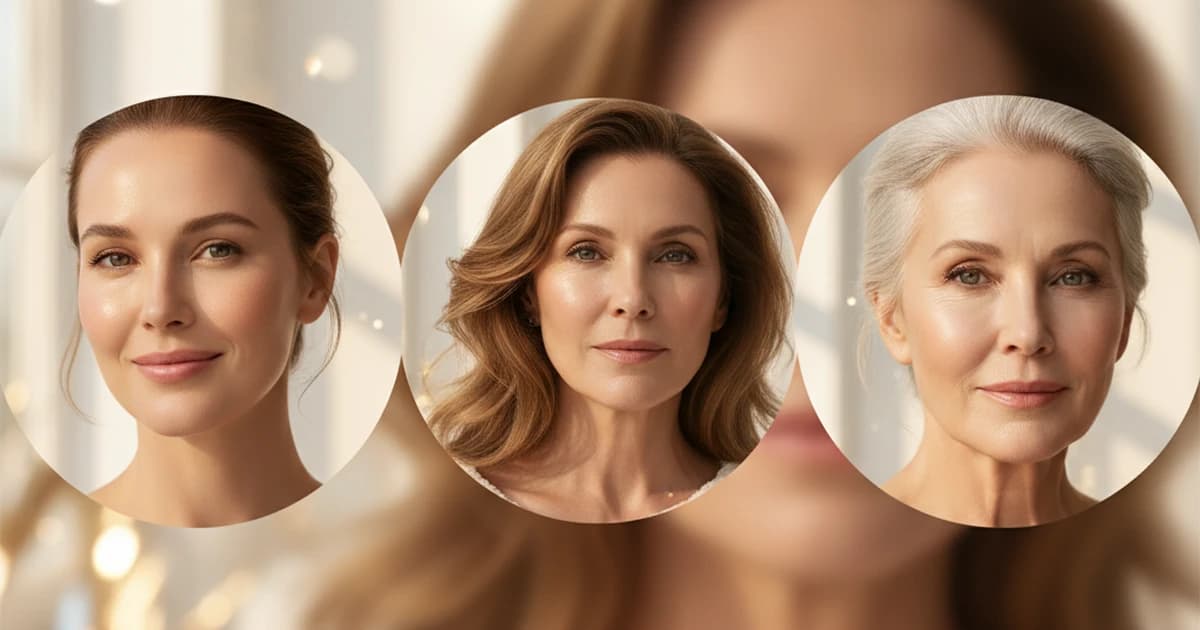
If you've ever looked in the mirror and thought “something has changed but I can't quite put my finger on it,” you're not imagining things. Your skin genuinely transforms decade by decade. Not dramatically overnight, but in subtle, cumulative ways that one day become hard to ignore.
After 20 years working with ultrasound, I've seen thousands of faces at every stage. And here's what I've learned: understanding what your skin is actually doing at your age is the single most useful thing you can do for it. Not chasing trends. Not buying everything the internet recommends. Just knowing what's happening beneath the surface so you can make smart, targeted choices.
Your 30s: The Quiet Shift
Your 30s are when ageing starts, but most people don't notice it yet. That's both a blessing and a trap. Because this is precisely the decade where small, consistent actions pay the biggest dividends later.
What's happening beneath the surface:
- Collagen production starts declining. From your mid-20s onward, you lose roughly 1% of your collagen each year. By 35, that cumulative loss starts showing.
- Cell turnover slows down. In your 20s, your skin renewed itself every 28 days or so. In your 30s, that stretches to 35 to 40 days. Skin looks a little less luminous, a little more tired.
- Fine lines begin appearing around the eyes and forehead. These are expression lines becoming permanent residents.
- Sun damage starts surfacing. All that UV exposure from your teens and 20s begins showing as uneven tone or early pigmentation.
What actually helps in your 30s:
- Sunscreen, every single day. This is the one product that makes the most measurable difference to how your skin ages. Brisbane's UV is no joke, even through autumn and winter.
- Vitamin C in the morning. Protects existing collagen from free radical damage and brightens dull skin.
- Retinol in the evening. Speeds up cell turnover and supports collagen production. Start low and build gradually.
- Preventative HIFU. More and more of my clients in their early to mid 30s are booking treatments not because they're trying to fix something, but because they want to stay ahead. A single session stimulates collagen deep in the skin, keeping things firm and lifted before laxity sets in.
I'm always honest about this: HIFU isn't necessary for everyone in their 30s. But if you're noticing the early signs of softening along the jawline or under the chin, it's a brilliant time to act. Prevention is always easier than correction.
Your 40s: The Visible Transition
This is the decade most women walk through my door. Not because something is “wrong,” but because the changes have become visible enough to want to do something about them. And that's completely reasonable.
What's happening beneath the surface:
- Collagen and elastin loss accelerates noticeably. Skin that used to bounce back from a pillow crease in minutes now takes longer. Gravity starts winning small battles along the jawline and cheeks.
- Hormonal shifts begin. Even before perimenopause, oestrogen levels start fluctuating, which directly affects skin thickness, hydration, and elasticity.
- Volume loss appears. The fat pads beneath your skin begin shifting and thinning. This is what creates the hollowing under the eyes and the deeper nasolabial folds that weren't there before.
- Skin becomes drier. Oil production decreases, and your skin barrier becomes less efficient at holding moisture. That “dewy” look requires more effort.
- Pigmentation becomes more persistent. Dark spots that used to fade on their own now settle in permanently.
What actually helps in your 40s:
- Richer moisturisers. Switch from lightweight gels to cream-based formulas with ceramides and peptides. Your barrier needs more support now.
- Consistent retinol use. If you started in your 30s, keep going. If you didn't, now is the time. It remains one of the most evidence-backed ingredients for mature skin.
- Hydration from the inside out. Water intake matters more than ever. Dehydrated skin exaggerates every line and shadow.
- HIFU for lifting and tightening. This is the sweet spot for HIFU. You have enough laxity to see meaningful improvement, and your skin still has the regenerative capacity to respond beautifully. Focused ultrasound reaches depths that topical products simply cannot, stimulating new collagen right where it's needed most. Many of my clients see their best results unfolding over three to six months as that fresh collagen matures.
Your 40s are not about turning back the clock. They're about working intelligently with what your skin is doing right now. And the results can be genuinely remarkable when you combine good daily habits with targeted treatments.
Your 50s: The Hormonal Reset
Menopause changes everything about your skin. I don't say that to alarm you. I say it because understanding the hormonal connection helps you respond effectively instead of feeling frustrated that your old routine has stopped working.
What's happening beneath the surface:
- Oestrogen drops significantly. In the first five years after menopause, women can lose up to 30% of their skin collagen. That is a staggering number, and it explains why skin can seem to change so rapidly during this period.
- Skin becomes thinner and more fragile. The dermis loses density, making skin more susceptible to bruising, irritation, and visible veins.
- Dryness becomes the norm. With lower oestrogen, your skin produces less natural oil and holds less moisture. The barrier weakens further.
- Laxity is more pronounced. Jowling along the jawline, sagging under the eyes, and a softening of the neck and décolletage become common concerns.
- Wound healing slows. Your skin takes longer to recover from everything, including treatments. This is why I always discuss realistic timelines with my clients.
What actually helps in your 50s:
- Barrier-first skincare. Prioritise ceramides, fatty acids, and squalane. Your skin's barrier is working overtime and needs reinforcement.
- Gentler actives. You might need to reduce retinol frequency or switch to retinaldehyde, which is effective but less irritating on thinning skin.
- SPF remains non-negotiable. Thinner skin is more vulnerable to UV damage. This is not the time to relax your sun protection.
- HIFU as a cornerstone treatment. When skin has lost significant collagen, stimulating new production from deep within becomes especially valuable. HIFU targets the foundational layers of the skin where surgical facelifts traditionally work, but without incisions, needles, or downtime. For women who want visible lifting without surgery, this is often the treatment that makes the most meaningful difference.
- Realistic expectations. I always have an honest conversation about what HIFU can and cannot achieve. In your 50s, results may take a little longer to develop and you might benefit from follow-up sessions. But the improvement in skin firmness, jawline definition, and overall tightness is real and measurable. Read my honest take on HIFU myths for more on this.
The Common Thread: Collagen
If there is one thing that ties every decade together, it's collagen. It's the protein that keeps your skin firm, plump, and resilient. And from your late 20s onward, your body makes less of it every single year.
Topical products can protect the collagen you have. Good sunscreen prevents UV from breaking it down. Retinol and vitamin C support its production at the surface level. But none of these can reach the deep structural layers where the most impactful collagen remodelling happens. That's the gap HIFU fills.
HIFU delivers focused ultrasound energy to precise depths beneath the skin, triggering neocollagenesis, the process of building brand new collagen. It's why the results develop gradually over months. Your body is literally constructing new structural support from the inside out.
When Should You Start Thinking About HIFU?
There is no single “right” age. I've treated women in their early 30s who wanted to stay ahead of ageing, and women in their 60s who were thrilled with their results. The question isn't really about age. It's about what your skin is doing right now and what you want it to do.
If you're noticing softening along the jawline, fine lines that don't bounce back, a little less definition in your cheeks, or skin that looks tired despite sleeping well, those are all signs your collagen could use a boost. And a free consultation is genuinely free with no obligation. I'll assess your skin, explain exactly what I see, and give you my honest recommendation. Sometimes that recommendation is to wait. Sometimes it's to start with a targeted area rather than a full face. I'd rather you trust my advice than feel pressured into anything.
Curious what your first session would actually look like? I wrote a complete walkthrough of what to expect on the day. And if you want to know how to support your results afterwards, my post-treatment skincare guide walks you through everything day by day.
Your Quick Reference by Decade
Skin Ageing at a Glance
- 30s: Collagen decline begins, fine lines appear, cell turnover slows. Focus on prevention: SPF, vitamin C, retinol, and consider preventative HIFU for early laxity.
- 40s: Visible laxity, volume loss, hormonal shifts, drier skin. The ideal window for HIFU. Upgrade moisturisers, stay consistent with actives.
- 50s: Post-menopausal collagen loss accelerates, skin thins, barrier weakens. Prioritise barrier repair, gentle actives, and HIFU as a cornerstone for lifting and firming.
Your skin is not broken at any age. It's simply doing different things. The more you understand those changes, the better equipped you are to support it, whether that's through the right products, the right treatments, or a combination of both.
Wondering What Your Skin Needs Right Now?
Book a free consultation at UltraGlo in Sunnybank Hills. I'll assess your skin, explain what's happening at your stage, and give you an honest recommendation tailored to your goals.
Book Your Free ConsultationPooja Chandra is the founder of UltraGlo, a HIFU specialist clinic in Sunnybank Hills, Brisbane. She is a qualified Sonographer with over 20 years of experience in medical ultrasound and holds an Undergraduate Certificate in Dermal Interventions.